

Featured
ColdStart and the Science of Reliable Autonomous Recovery
ColdStart examines whether AI agents can recover unfamiliar broken systems while preserving data, security, and persistent behavior—bringing reliable recovery into focus as a measurable capability.

No research matches those filters yet.
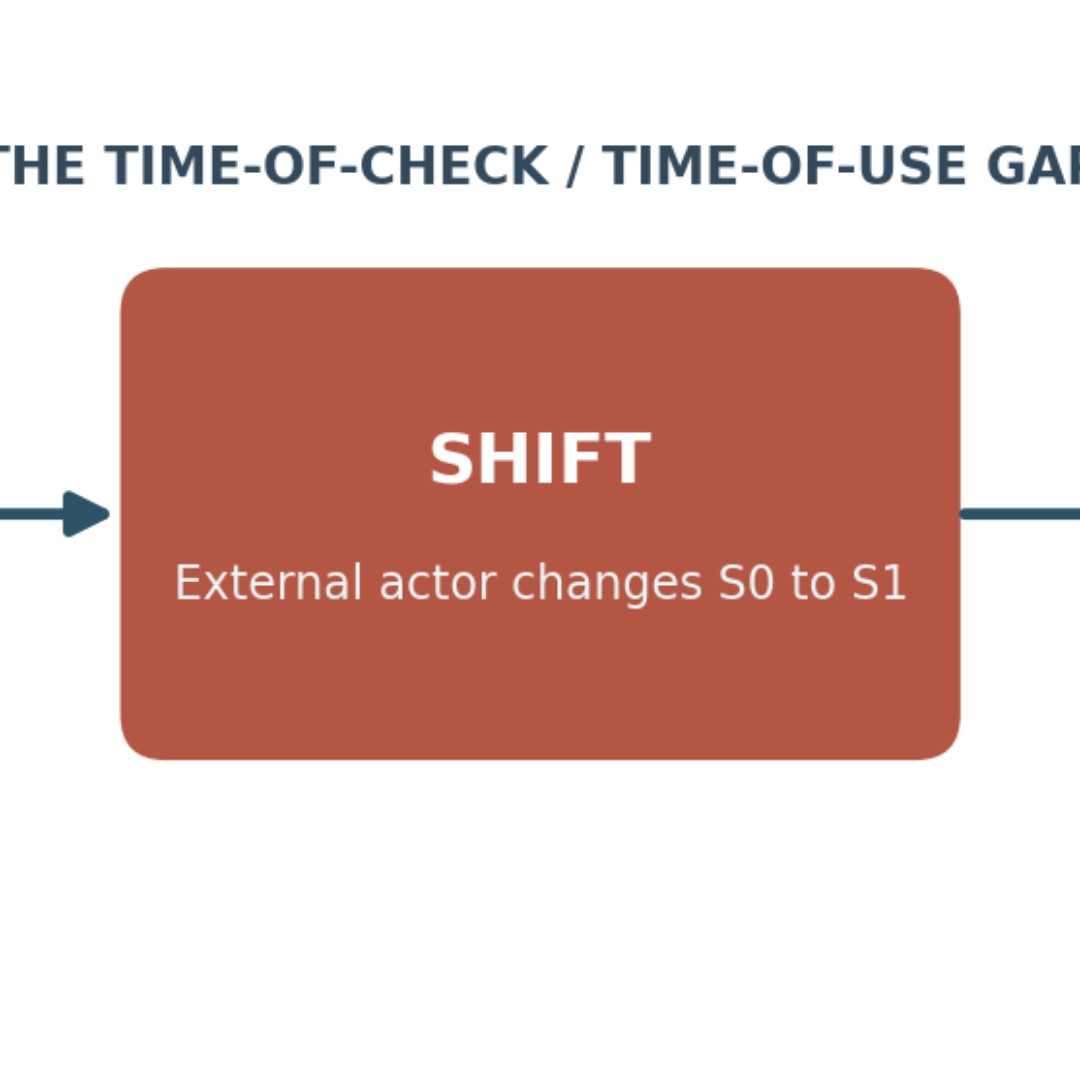
Can AI Agents Adapt When the World Changes?
AI agents often struggle when environments change mid-task, risking outdated decisions, lost work, and unsafe actions. This research proposes the State-Shift Evaluation Protocol (SSEP) to evaluate how reliably agents detect, adapt to, and safely handle unexpected changes.

The Quantum Migration Problem: Can the World Replace Its Cryptography Before It Becomes Obsolete?
A practical guide to post-quantum cryptography migration: NIST standards, global roadmaps, crypto agility, hybrid protocols, implementation risks, and a proposed framework for measuring readiness.
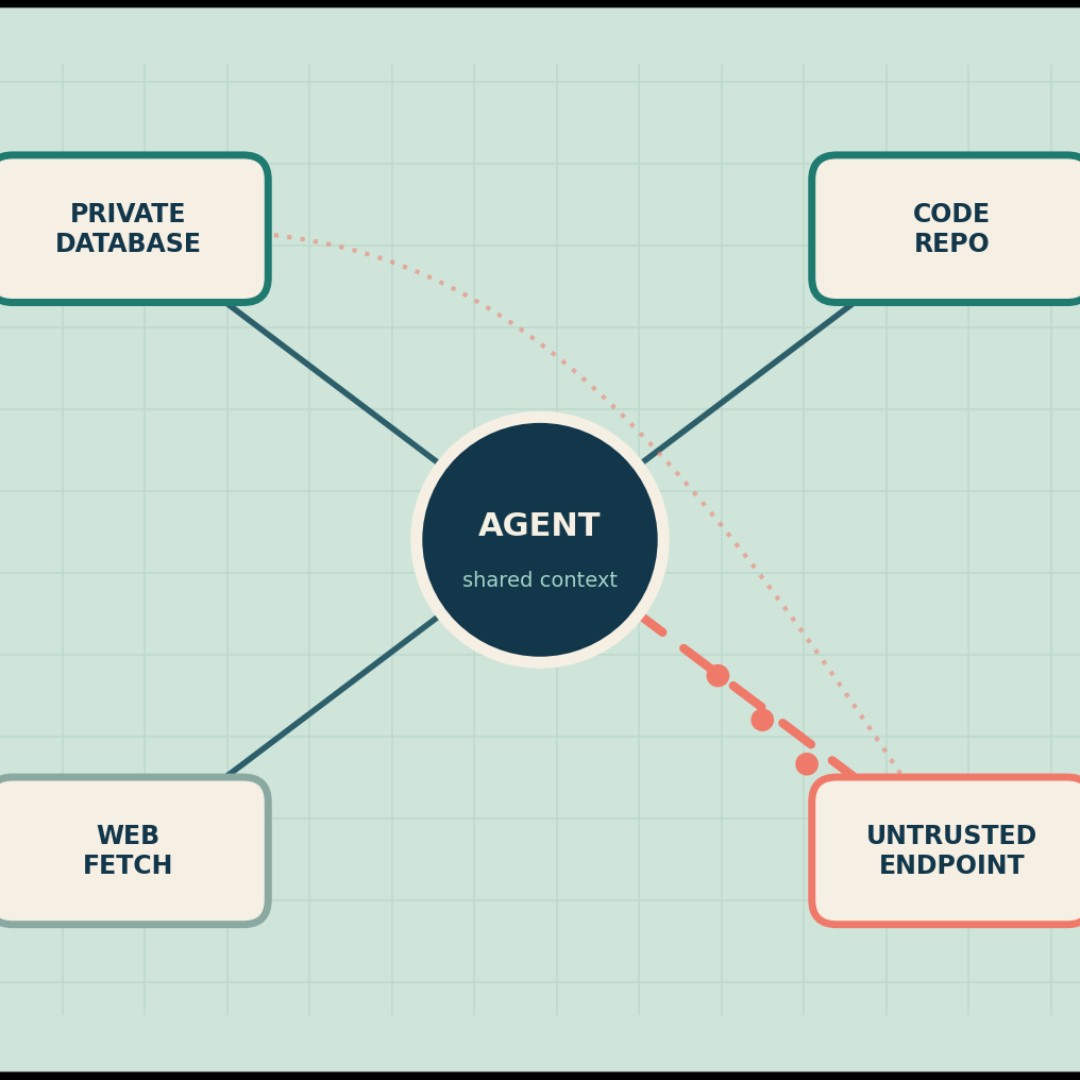
MCP Security: Confused Tools and the Agent as a Data-Leak Bridge
MCP connects AI agents to external tools but creates security risks by mixing trusted and untrusted content. This paper explores “Confused Tool” attacks and proposes the Three Gates of Tool Trust to prevent private data leaks across tools.

The Upgrade Is Not the Fix: Can Coding Agents Safely Modernize Real-World Software?
A dependency update can compile and still break production behavior. Explore why coding agents struggle with software migrations and how a layered evidence framework can test safer upgrades.

Rollout-Efficient Agentic RL: Getting More Learning From Fewer GPU-Hours
Most AI agent training runs waste GPU time on rollouts that teach the model nothing. This article covers three ways to get more learning per GPU-hour, plus a simple metric to track it.

The Physics Gap: Can Generative World Models Become Trustworthy Training Environments for AI Agents?
Can AI-generated worlds teach robots when their physics is wrong? This research examines failure fidelity, action-conditioned world models, and sim-to-real transfer—and proposes a reproducible framework for evaluating RL environments.

The Race Toward AGI: Can Human Oversight Keep Pace with Autonomous AI?
As AI races toward AGI, can humanity keep control? Explore the growing gap between AI capabilities, human oversight, and accountability.

When the Curriculum Cheats: Designing RL Environments That Teach Transferable Skills
Harder training tasks do not automatically produce transferable AI skills. Learn how RL curricula can overfit to generators, and explore a proposed framework for testing surface, structural, and mechanism-level generalization

The Environment Is the Experiment: Causal Fidelity in Reinforcement Learning for AI Agents
An AI agent can master a convincing simulation and still learn the wrong behavior. Explore causal fidelity in RL environments and a proposed audit of state transitions, observations, resets, and delayed consequences

When Agents Infect Agents: Prompt Injection Propagation and Trust Failures in Multi-Agent Systems
Discover how prompt injection attacks spread between AI agents and how trust boundaries, security evaluations, and containment strategies can prevent cascading failures.

The Hidden Challenge of Verifiable Rewards: How AI Agents Learn the Wrong Behaviors
A passing reward does not always mean an AI agent completed the intended task. Explore how reward hacking, weak verification, and misleading feedback affect AI agent training—and why robust RL environments and verifiable rewards matter for reliable AI systems.

The Sandbox Is Not the Grader: Building Trustworthy Agent Evaluations with Harbor
Discover how Harbor strengthens AI agent benchmarks through secure verification, reliable grading, and accurate performance evaluation

Beyond the Benchmark Shape: Evaluating AI-Generated CUDA and Triton Kernels Under Realistic AI Workloads
AI-generated CUDA and Triton kernels can pass familiar benchmarks yet fail on new shapes or deliver little serving benefit. Explore a reproducible protocol for testing correctness, workload shift, GPU efficiency, and deployment value.

Why AI Agents Fail at Long-Horizon Tasks
Why do AI agents fail at long-horizon tasks? Explore how state tracking, cascading errors, changing workflows, and weak verification affect agent reliability—and how realistic evaluations can reveal the gaps.

Poisoned Logs and Broken Trust: Why Autonomous Recovery Agents Need Adversarial Telemetry Evaluation
Logs can guide an AI recovery agent - or mislead it. This research perspective examines poisoned telemetry, indirect prompt injection, and how executable environments can measure repair success and resistance to hostile instructions separately.

Knowing When to Ask: Uncertainty, Abstention, and Evidence-Seeking in AI Agents
When should an AI agent act, inspect, ask, or abstain? This paper connects confidence calibration with the cost of error and the value of evidence, proposing a research framework for measuring uncertainty-aware decisions in executable environments.

Guardrails at the Point of Action: A Systems Framework for Tool-Using AI Agents
AI guardrails must govern what agents can do, as well as what they say. This paper proposes an action-centered framework for tool authorization, runtime enforcement, and oversight, with a research protocol for measuring safety and useful task completion.

Beyond the Context Window: Why AI Agents Need Memory That Works
AI agents need memory that helps them remember, revise, and resume work. Explore the research behind persistent memory and how custom datasets and environments can reveal whether agents use past experience wisely when conditions change.

The Experience Layer of AGI: How Real-World Tasks Shape More General AI
The path toward more general AI depends on the experiences agents learn from. Explore how diverse tasks, custom environments, and domain expertise support adaptation and transfer - and how Deaimer contributes through datasets and executable workflows.

From Coding Agents to Scientific Agents: Why Domain Expertise Matters
Working code is only the beginning of scientific AI. Explore why domain knowledge, data semantics, numerical judgment, and custom learning environments matter when developing agents for real research workflows.

Beyond Benchmark Scores: Why Realistic RL Environments Matter for Reliable AI Agents
Explore how realistic reinforcement learning (RL) environments improve AI agent training, evaluation, and reliability beyond benchmark scores. Discover why verifiable rewards, diverse tasks, and real-world testing matter for building capable AI agents.

Termetheus and the Foundations of Environment Based AI Learning
Explore how Termetheus turns custom terminal tasks into executable learning environments for AI agents, supporting post-training, domain-specific skills, and evaluation on unseen problems.
ColdStart and the Science of Reliable Autonomous Recovery
ColdStart examines whether AI agents can recover unfamiliar broken systems while preserving data, security, and persistent behavior—bringing reliable recovery into focus as a measurable capability.
Let's make your AI better together.
Tell us what you're training, aligning, or evaluating. We'll map a delivery plan, staffing model, and timeline within one working week.